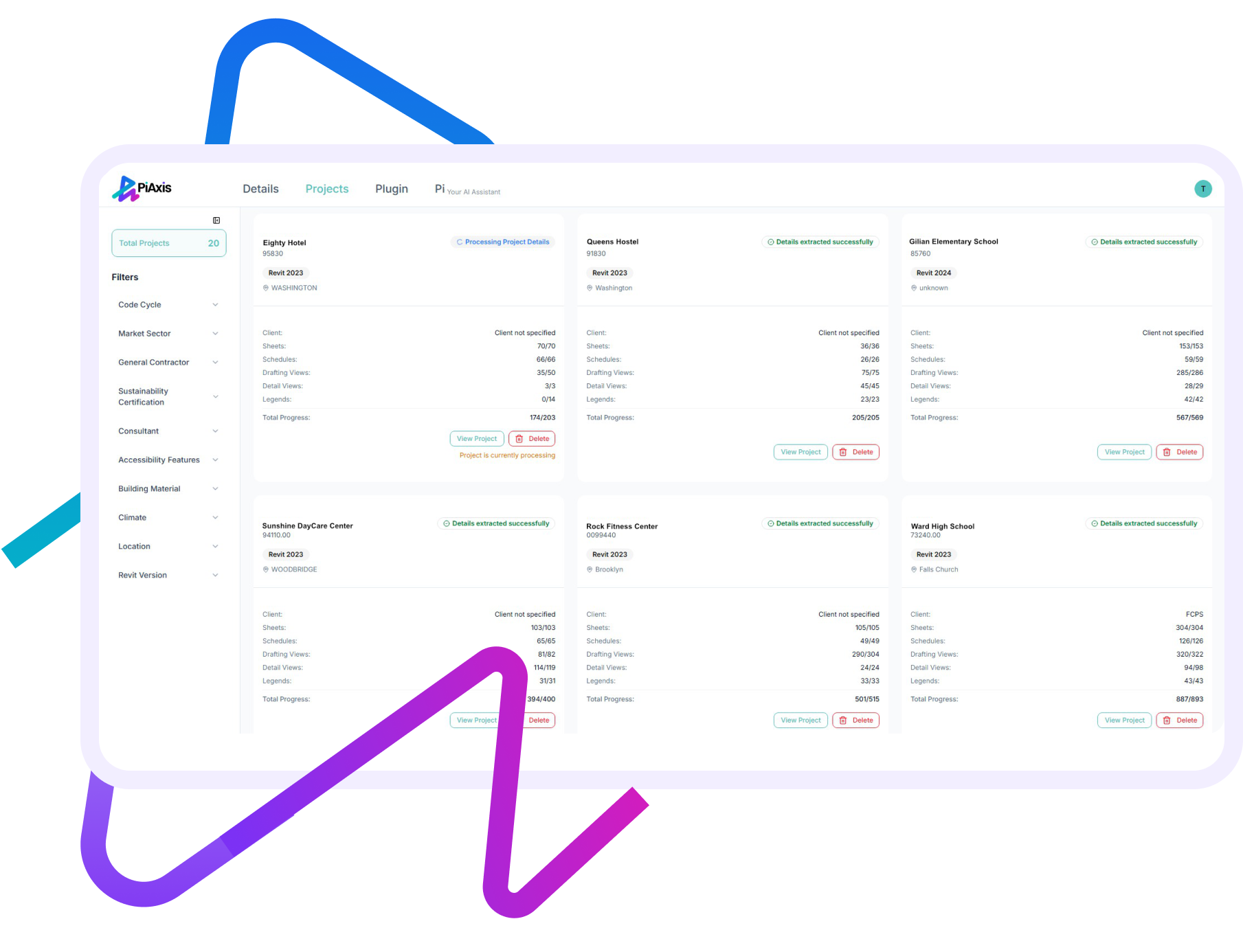
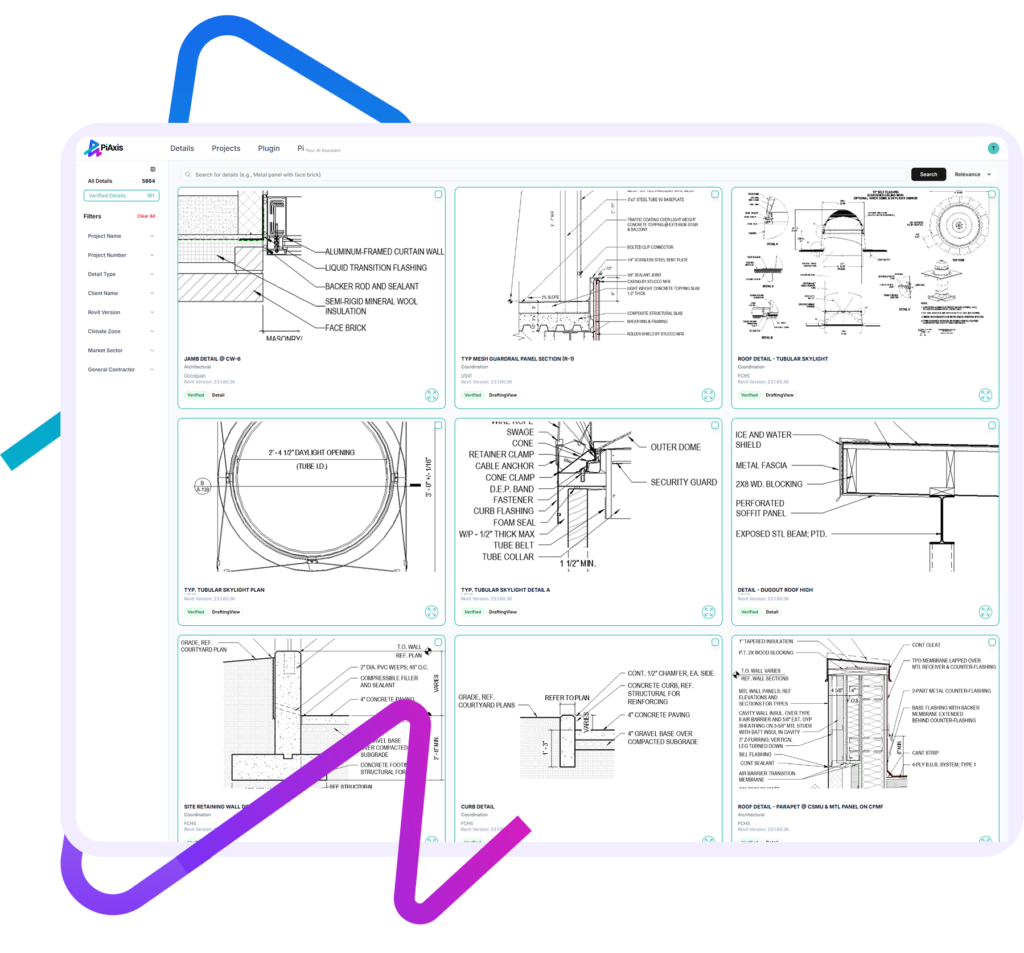
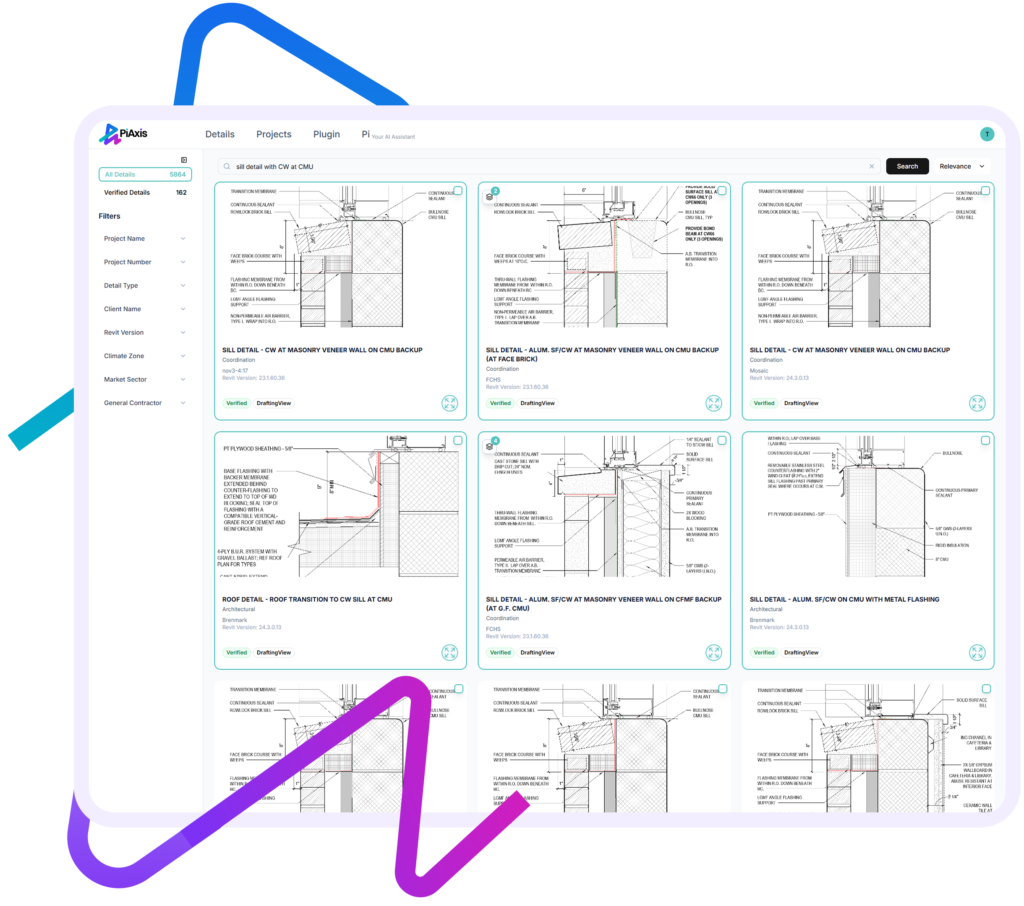
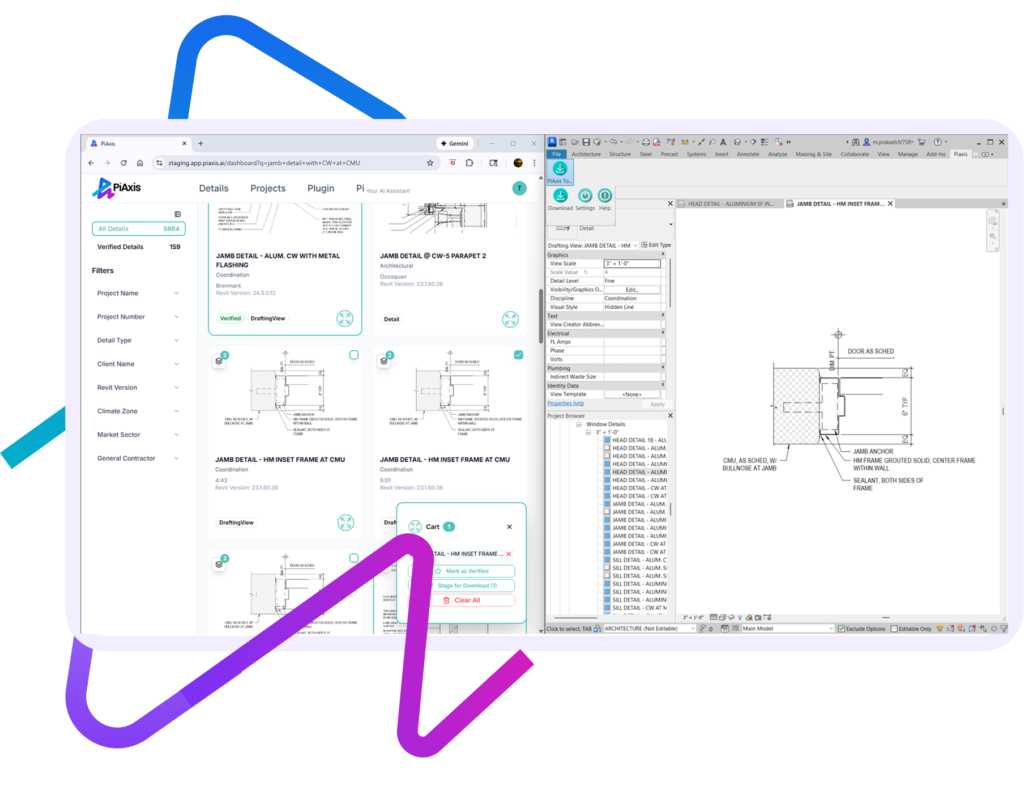
Pi brings old projects into a single library. Allow juniors access only to verified details. Search for details using a Google like search. Download selected details into Revit in 5 seconds
Why Architects & Engineers choose P
i
Ax
i
s ?
PiAxis has been a helpful tool for our team, making it easy to find and import Revit details from past drawing sets.
Stephanie T. Horowitz, AIA, CPHC
Principal, Zero Energy Design
PiAxis delivers clear value in quicker and more effective project delivery. Faster access to relevant details, auto detailing per firm standards, and better consistency across drawings makes it a useful addition to Revit workflows.
Tarun Chordia
Project Manager, Stantec (NYC)
The problem:
Most firms have thousands of construction details buried inside old Revit files. Finding the right one means:
Opening multiple outdated models
Asking senior team members for references
Redrawing details that already exist
This wastes time, creates inconsistencies, and leads to costly errors.
PiAxis Automates Annotation & Callout Detailing
Organize your firm's projects into one multi-use library
Pain: Details are locked inside past models and impossible to search.
Upload models in minutes using simple drag & drop
Convert full models into easy-to-view images of details, legends and schedules.
No credit card required!
Mark your best details and standardize quality with verified details
Pain: Junior team members don’t know which details are approved.
Declutter 1000s of firm details into a small set of “Verified Details”
Juniors create high quality details by accessing only verified details
Pain: Searching manually or asking around slows teams down.
Google‑like AI search across your firm’s details
Filter & find the right details using market sector, climate zone, location, materials & many more
Pi auto-groups similar details - so your library is not duplicated
Search using abbreviations and similar terms - still get the best details.
No credit card required!
Works directly with Revit; just 10X faster
Pain: Traditional libraries break Revit workflows.
Download selected details (one or many) directly into Revit using just 2 clicks.
No waiting for models to open or upgrade
No credit card required!
Frequently asked questions
1. What does PiAxis actually do in design documentation?
PiAxis helps organize, search, and reuse existing design information more efficiently. In documentation workflows, this often means surfacing relevant precedents, standards, and details much faster.
PiAxis, for example, makes a firm’s detail library intelligent and searchable, allowing teams to quickly find and reuse trusted details directly within Revit rather than recreating them from scratch.
2. Is PiAxis replacing architects or engineers?
No. PiAxis does not replace professional judgment or design intent. It supports architects and engineers by reducing repetitive documentation tasks and improving access to firm knowledge.
With PiAxis, teams stay fully in control—AI assists with finding and preparing details, while all design decisions remain with the project team.
3. How reliable is PiAxis for technical documentation?
PiAxis is highly reliable because it is grounded entirely in your firm’s own, vetted documentation. It works as an assistive tool—not an author—by finding, organizing, and reusing existing firm-approved details rather than generating unfamiliar or external technical solutions.
All outputs remain fully controlled by your team, and existing review and QA/QC processes stay exactly the same. PiAxis simply helps teams work faster and more consistently while preserving professional judgment and accountability.
4. Can PiAxis understand our firm’s specific standards and way of detailing?
Yes. When AI is trained on a firm’s own documentation, it can reflect internal standards and preferences. PiAxis learns from your firm’s existing detail library, allowing outputs to align with how you already document—not introducing generic or one-size-fits-all content.
5. Which are the best AI tools in architecture and engineering?
The best AI tools in architecture and engineering are those that integrate seamlessly into existing workflows and help teams work faster without compromising quality or control. Today, AI is commonly used for design visualization, documentation efficiency, and knowledge management.
For design documentation, tools like PiAxis support both architects and engineers by making firm-approved details easy to find, reuse, and standardize directly within Revit. This improves speed, consistency, and coordination across projects while keeping professional judgment in human hands.
6. How does PiAxis help with knowledge loss between teams or offices?
PiAxis can centralize and make accessible details and precedents that typically live in scattered project folders or individual experience.
PiAxis captures institutional knowledge embedded in your details and makes it easily accessible to teams across projects and offices, reducing reliance on tribal knowledge.