×

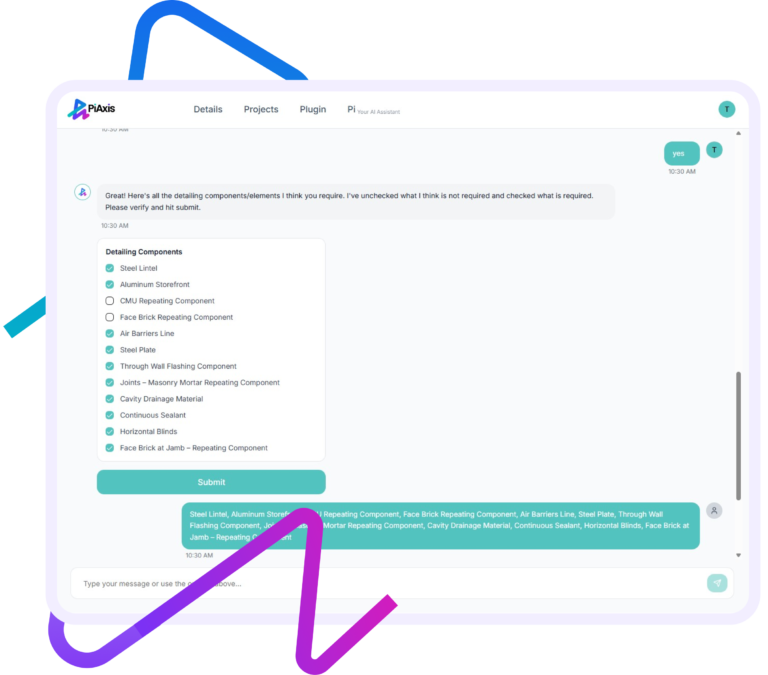
SWAPP focuses on automating annotation, dimensioning, sheet & view creation. PiAxis helps architects auto-generate Revit details learning from your firm’s past projects. It auto-suggests reference details from your project library & adapts them to the conditions (wall layers, climate zones, etc.) of your current project. Instead of rebuilding details every project, architects can reuse and adapt firm standards instantly.
Capability |
PiAxis |
SWAPP |
|---|---|---|
| Detail Library Management | ✅ Core strength — organize, govern, filter, and reuse Revit details | ❌ Not a core feature |
| Search & Retrieval | ✅ Google-style + natural language search across firm details | ❌ Not a primary capability |
| Context-Aware Auto-Suggestion | ✅ Suggests relevant details automatically based on the active callout/context in Revit | ❌ User-initiated automation |
| AI-Assisted Detailing (Current) | ✅ AI agents trained on firm standards assist and generate project-ready details in Revit | Partial — automation focuses on documentation output, not fine-grain detailing |
| Detail Creation / Augmentation | ✅ Generate or adapt details from firm standards and past work | ❌ Not detail-centric |
| Standards Enforcement | ✅ AI trained directly on firm standards and historical details | ✅ Yes — standards applied across documentation |
| Knowledge Retention | ✅ Converts past firm work into a living, searchable system | Partial — standards learned, but not detail-centric |
| Guiding Junior Staff | ✅ Contextual suggestions + AI guidance embedded in Revit | Indirect — automation reduces manual tasks |
| Rework Reduction | ✅ Reuse + suggestion + generation | ✅ Automation of documentation tasks |
| Integration with Revit | Deep, context-aware Revit integration | Revit-based workflows with cloud automation |
| AI Depth | Generative + predictive + contextual (detail documentation-centric) | Procedural automation (documentation-centric) |
Unlike library tools that only store content, PiAxis uses AI trained on your firm’s standards to:
The result: details that match the project conditions instantly.
No credit card required!
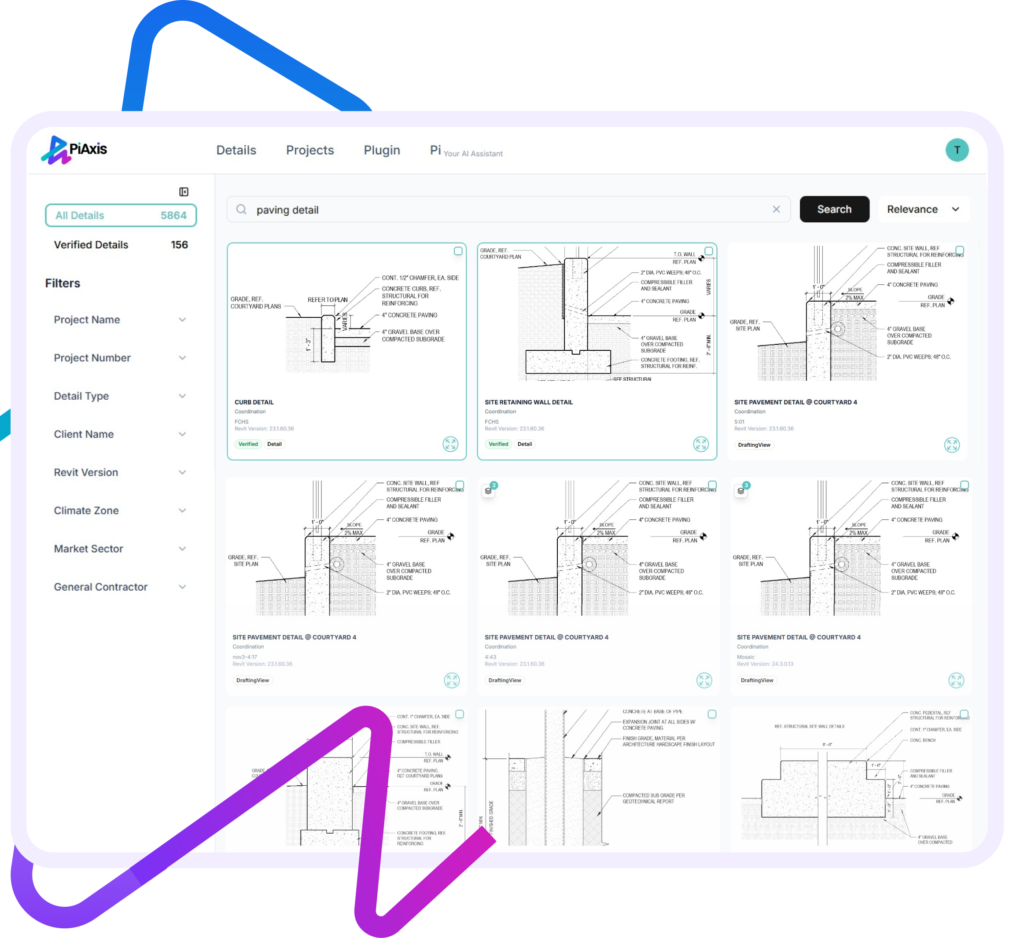
Architectural firms already have hundreds of valuable details across past projects. PiAxis automatically:
No manual tagging required.
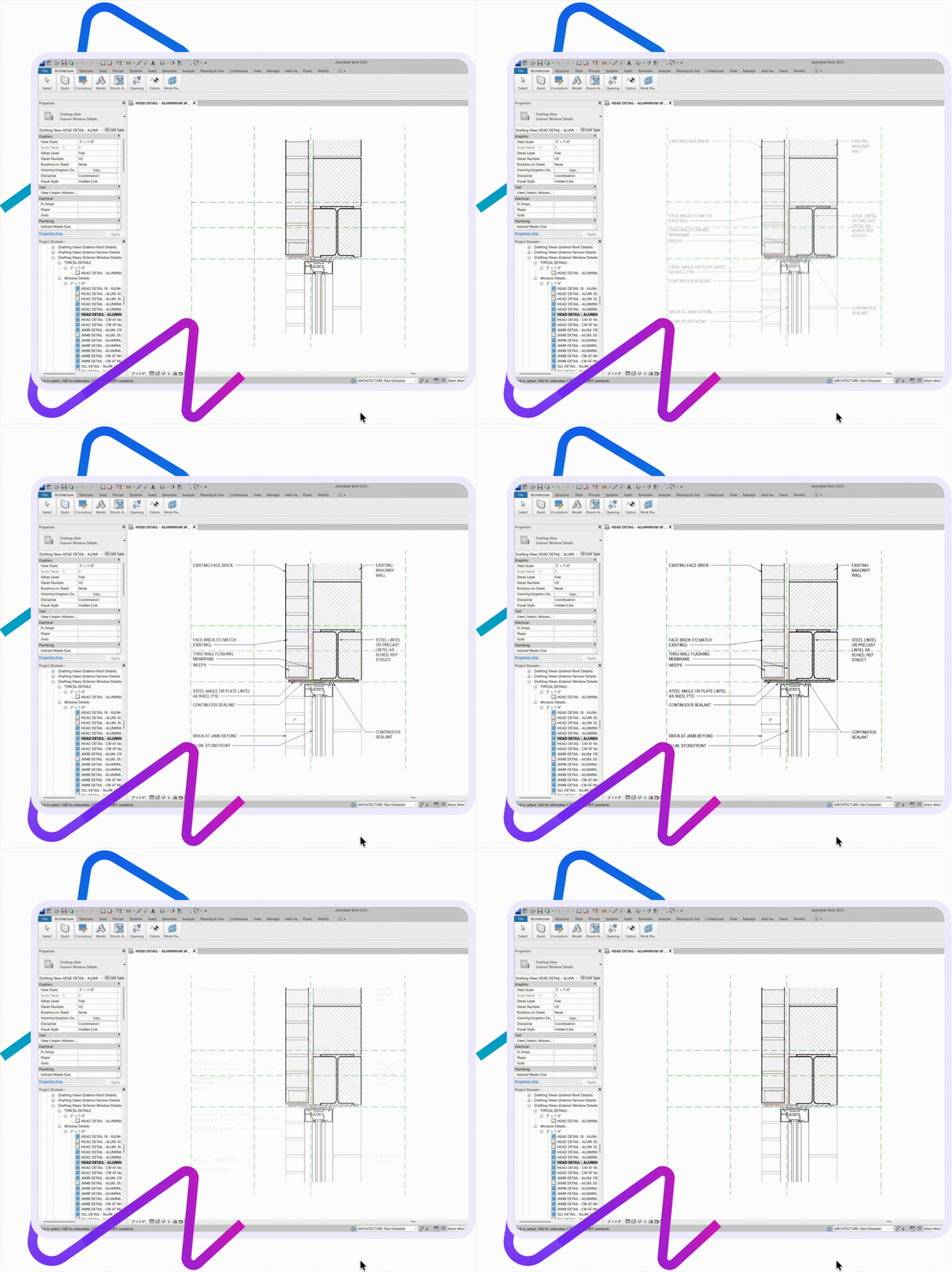
Instead of searching folders or past projects, PiAxis understands the context of what you’re drawing. When you place a callout, PiAxis can automatically suggest relevant firm-approved details. This reduces:


Firms evaluating SWAPP often discover that documentation automation does not capture firm knowledge.
PiAxis focuses on something deeper – architectural intelligence. Instead of automating drawings alone, PiAxis creates a system that:
Over time, the system becomes more valuable with every project.
PiAxis is ideal if your firm wants to:
SWAPP may be better if your goal is primarily:
PiAxis brings the power and the promise of AI into one of the most time-consuming, tedious, and the “least fun” tasks architects and engineers need to do – creating details. And it works with Revit!

PiAxis delivers clear value in quicker and more effective project delivery. Faster access to relevant details, auto detailing per firm standards, and better consistency across drawings makes it a useful addition to Revit workflows.

×